
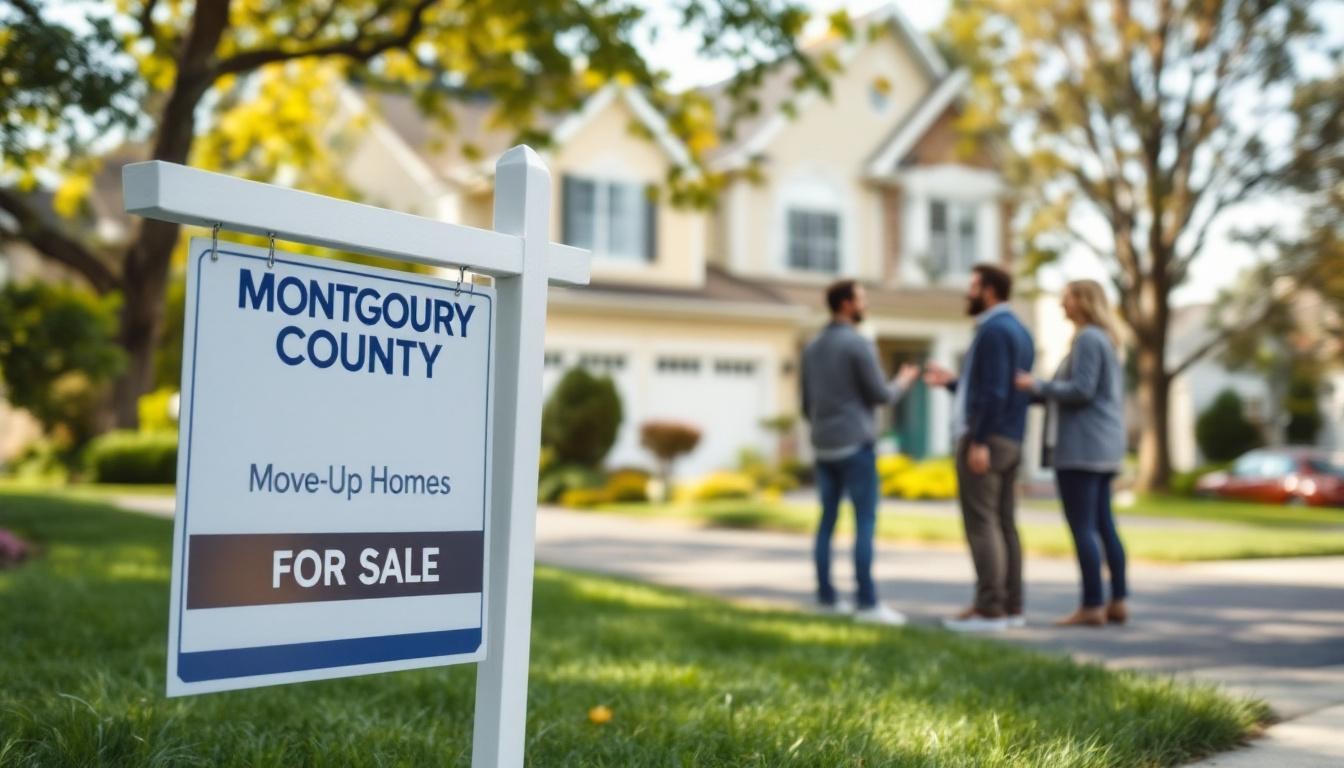
Moving up to a larger home in Montgomery County is one of the biggest financial decisions you’ll make. Whether you’re seeking more space, better schools, or a different neighborhood, the move-up market requires a different strategy than your first home purchase.
We at Johnson Webb Realty have guided hundreds of buyers through this process, and we’ve seen what separates smart moves from costly mistakes. This guide walks you through everything you need to know about Montgomery County move-up homes.
What Defines a Move-Up Home in Montgomery County
Understanding the Move-Up Transaction
A move-up home means different things to different buyers, but the core definition is straightforward: you sell your current property to purchase a significantly larger or better-positioned home in a stronger location or school district. The financial mechanics set this apart from a first purchase. You extract equity from your existing home and roll it forward into your next one. According to HAR data, Montgomery County inventory has normalized since the pandemic peak, and days on market have risen, which means timing your sale and purchase requires precision. The 2025 market shows median price appreciation of 2.4% year-to-date through November across the county, but growth is uneven. Silver Spring leads with 3.8% gains, while Potomac and Gaithersburg have experienced declines around 2%. This hyperlocal variation matters enormously for move-up buyers because your current home’s market strength directly affects how much equity you can access for your next purchase.

Pricing Your Current Home Realistically
If you sell in a neighborhood with softer demand, you need to price more aggressively or invest in visible repairs to avoid extended marketing time. The slower market also works in your favor on the purchase side-sellers offer credits and concessions more readily, and you face fewer bidding wars. Your equity calculation should include estimated selling costs, repair credits, and realistic proceeds, not historical peak prices from 2021. That foundation matters: understanding exactly what you have to work with before you start shopping separates smart moves from financial overreach.
Schools and Transit Shape Your Next Move
Most move-up buyers cite three reasons for moving: needing more square footage, accessing better schools, or reaching a neighborhood closer to work. In Montgomery County, school district changes matter significantly. The county implements new high schools slated to open in 2027, and MCPS boundary proposals are underway, meaning school assignments will shift. If your current home’s school zone is about to change, that information should influence your timing and target neighborhoods. Transit access reshapes buyer priorities as well. The Purple Line expansion and bus rapid transit upgrades expand connectivity across more neighborhoods, making areas like North Bethesda and the Pike & Rose corridor increasingly attractive for move-up buyers who value walkability.
Neighborhoods That Support Long-Term Value
Bethesda offers direct Red Line access with median single-family prices near 1.6 million in early 2025, while condos provide more affordable entry points. Rockville and the King Farm area balance price and accessibility, with median single-family homes around 750k and townhomes near 600k, supported by neighborhood shops and parks. Gaithersburg and Clarksburg are fast-growing for new construction, but new builds require thorough due diligence-verify county permit history, read builder reviews, and commission independent inspections. Your move-up home should align with long-term fundamentals: proximity to employment centers, school quality, and neighborhood trajectory matter far more than chasing past appreciation. These factors determine whether your next home holds value and serves your family’s needs for years to come. With the right neighborhood foundation in place, you’re ready to assess your financial readiness and identify which areas truly fit your move-up goals.
Finding Your Move-Up Home in Today’s Market
Calculate Your True Equity First
The financial foundation of a move-up purchase differs sharply from a first-time buy because you manage two transactions simultaneously. Start by calculating your true equity using a net sheet that accounts for your current home’s likely sale price, realtor commissions, closing costs, and any repair credits you’ll offer buyers. HAR data shows days on market have risen since the pandemic peak, meaning overpriced homes linger on the market and delay your move-up timeline. Price your current home based on recent comparable sales in your neighborhood, not 2021 peaks. If your current home sits in a neighborhood experiencing price declines like Potomac or Gaithersburg, aggressive pricing or visible repairs become necessary to generate the equity you need for your next purchase.
Test Your Budget Against Reality
Once you know your available funds, calculate the monthly payment difference between your current mortgage and your target move-up home. If that delta stretches your budget uncomfortably, you’re overreaching. The slower 2025 market actually favors dual-move buyers because sellers offer credits and concessions more readily, reducing your out-of-pocket repair costs on the purchase side. Before writing offers, compare your future monthly payment to your household income and existing debt obligations using a realistic pre-approval from a local lender who understands Montgomery County’s specific property tax rates, HOA structures, and insurance costs.

Online calculators miss these localized expenses, which can add hundreds of dollars monthly.
Match Lifestyle Priorities to Neighborhood Data
Identifying neighborhoods requires matching lifestyle priorities to data rather than emotion. If shorter commutes matter most, focus on areas near Red Line access in Bethesda or the upcoming Purple Line connectivity in North Bethesda and Pike & Rose, where median single-family prices sit around 900k. If school quality drives your move, cross-check MCPS boundary maps against the new high schools opening in 2027 to avoid selecting a neighborhood whose school assignments will shift immediately. Try the county’s interactive development map and tax estimator before committing to any neighborhood, since approved projects nearby can affect property values and school capacities.
Evaluate Neighborhoods by Price and Character
Rockville and King Farm balance affordability with accessibility at median single-family prices near 750k, while Potomac appeals to buyers seeking larger lots and green space despite softer 2025 price momentum. New construction in Clarksburg and Gaithersburg demands careful verification of builder reputation, county permit history, and independent inspections to confirm warranty quality. Each neighborhood offers distinct advantages-proximity to employment centers, school quality, and neighborhood trajectory matter far more than chasing past appreciation. These factors determine whether your next home appreciates steadily and meets your family’s needs for years ahead. A local real estate agent who knows permit records, boundary proposals, and neighborhood trajectories speeds this process and prevents costly surprises, helping you move forward with confidence into the next stage of your search.
Mistakes That Drain Your Move-Up Budget
Underestimating Your True Monthly Cost
The gap between what you think you can afford and what you actually can afford destroys more move-up purchases than any other factor. Most buyers calculate their budget by looking at monthly payment alone, ignoring the hidden costs that Montgomery County specifically imposes. Property taxes vary dramatically by subdivision and MUD district, HOA fees range from zero to several hundred dollars monthly, and insurance costs near Lake Conroe run higher than inland areas. An online calculator might show you can afford a 950k home, but when a local lender runs actual numbers for your target neighborhood, that same home costs 300 to 400 dollars more monthly once taxes, insurance, and HOA are factored in.

That difference compounds over 30 years and often forces you to either compromise on your actual target home or stretch yourself dangerously thin.
The mistake compounds when you fail to account for repair credits you’ll offer on your current home’s sale and seller concessions you’ll negotiate on the purchase side. If you budget assuming you’ll pay full price with no concessions, you plan for a market condition that no longer exists. Work with a local lender who knows Montgomery County’s specific tax structures, then subtract 10 to 15 percent from your maximum approved amount to create breathing room for unexpected expenses, rate lock delays, or inspection surprises.
Ignoring Neighborhood Fundamentals and Resale Value
The second critical mistake is ignoring resale value when you select your move-up home. Buyers fixate on current price and monthly payment but overlook whether the neighborhood will hold value over the next five to ten years. Before you commit to any neighborhood, verify that it has fundamentals supporting long-term value: proximity to employment centers, school quality, approved transit improvements, and development plans that enhance rather than detract from desirability. The county’s interactive development map shows approved projects near any address, preventing the costly surprise of major construction beginning next door after you close.
Rushing Into New Construction Without Due Diligence
The third mistake is moving too fast without proper research into permit history, boundary changes, and builder reputation if you consider new construction. New homes in Clarksburg and Gaithersburg appeal to move-up buyers seeking modern layouts and warranties, but builders vary wildly in quality and responsiveness. Pull permit history for your target property and read builder reviews to prevent discovering foundation issues or incomplete work months after closing. Rushing to write an offer without understanding whether your current neighborhood’s school boundaries will shift in 2027 when new high schools open could lock you into a home whose school assignment changes immediately after purchase, eroding resale appeal. These three mistakes-overestimating your true budget, ignoring neighborhood fundamentals, and skipping due diligence-account for nearly every regretful move-up purchase.
Final Thoughts
Moving up in Montgomery County requires balancing financial discipline with neighborhood fundamentals. Calculate your true monthly cost with a local lender, verify neighborhood trajectories using county data, and commission independent inspections on any new build. Your Montgomery County move-up homes should serve your family for years, not just satisfy today’s desire for more space.
Price appreciation varies sharply by neighborhood-Silver Spring gained 3.8% year-to-date while Potomac declined 2%-meaning your neighborhood choice directly affects your home’s future value. School boundary shifts coming in 2027 and Purple Line expansion will reshape which areas attract sustained buyer demand. These aren’t theoretical concerns; they’re concrete factors that determine whether your next home appreciates steadily or stagnates.
Start your search by calculating your true equity, testing your budget against realistic monthly costs, and matching your lifestyle priorities to neighborhoods with strong fundamentals. The slower 2025 market actually favors move-up buyers because sellers offer credits and concessions more readily, reducing your out-of-pocket costs on both sides of the transaction. Johnson Webb Realty specializes in residential home sales and local market expertise, combining up-to-date listings with personalized guidance to help you navigate your move-up purchase with confidence.